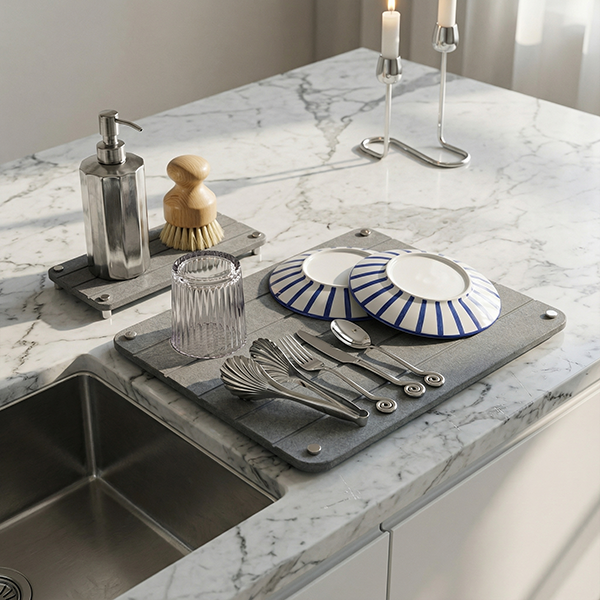
Let’s talk about a kitchen villain you might not see coming: mold. It’s not just something hiding behind bathroom tiles or lurking in damp basements—mold loves the kitchen, and it could be quietly affecting your health.
If you’ve been dealing with unexplained sneezing, coughing, or that funky musty smell near the sink, it might be time to investigate. According to Healthline, exposure to household mold can trigger symptoms like nasal congestion, skin irritation, and lung issues—especially for those with asthma or allergies.
Let’s break down where mold hides, how to spot it, and what you can do to kick it out for good.
Where Mold Grows in the Kitchen
Mold thrives in warm, moist places with poor airflow—and unfortunately, that describes most kitchens. Here are the most common hotspots:
- Under and behind the sink (watch for slow leaks!)
- Beneath dish drying mats and sponges
- Along grout lines and windowsills
- Around damp items like towels, soap trays, or cutting boards
And here’s the sneaky part: mold doesn’t always show up in plain sight. That strange, earthy smell? It could be a warning sign.
Signs Mold Might Already Be Lurking
How do you know if mold is already camping out in your kitchen?
- A musty or damp smell that lingers
- Peeling paint or swollen countertops
- Black or gray spots near damp areas
- Allergy-like symptoms that flare up in the kitchen
Even “clean-looking” surfaces can be hiding spores. Mold isn’t always visible—but it’s always opportunistic.
Why Some Dish Mats Make Mold Worse
Soft, absorbent mats seem helpful—until they’re not.
Fabric and silicone drying mats stay damp for hours, especially in low-ventilation areas. Unless you’re tossing them in the laundry every day (let’s be honest—who does?), they quickly become a hotspot for bacteria and mold.
If your mat constantly feels soggy or smells sour, it’s more than just annoying—it’s a hygiene hazard.
[Also read: The Dirty Secret Hiding in Your Dish Towels — And Why a Diatomite Mat Is Better]
The Best Anti-Mold Fix? A Diatomite Mat
This is where the diatomaceous earth mat changes everything.
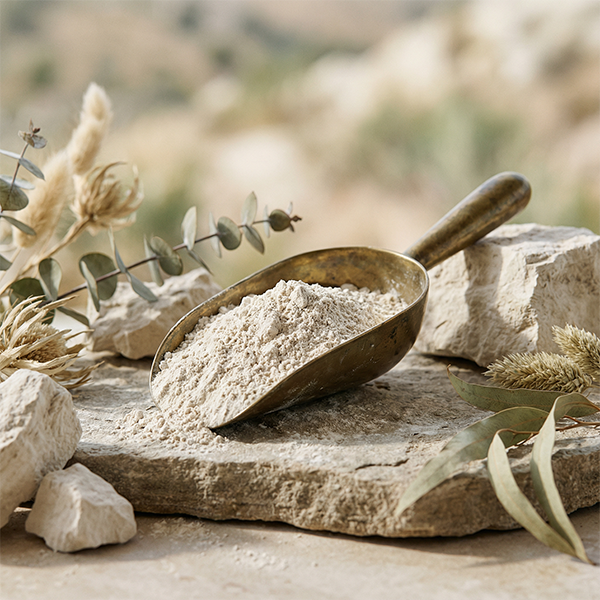
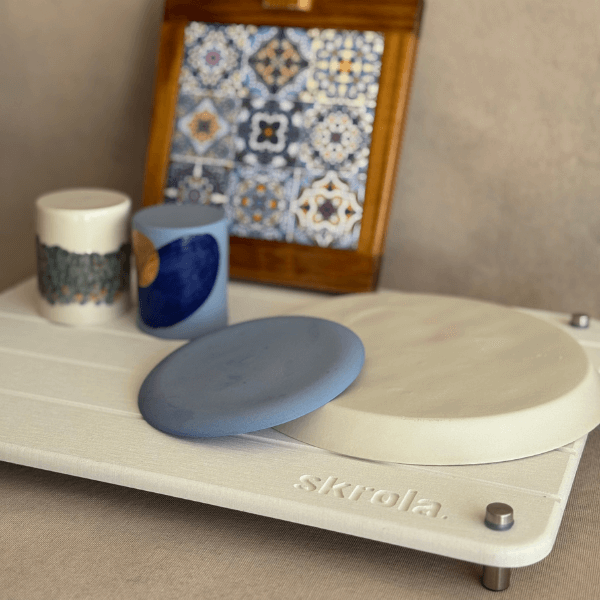
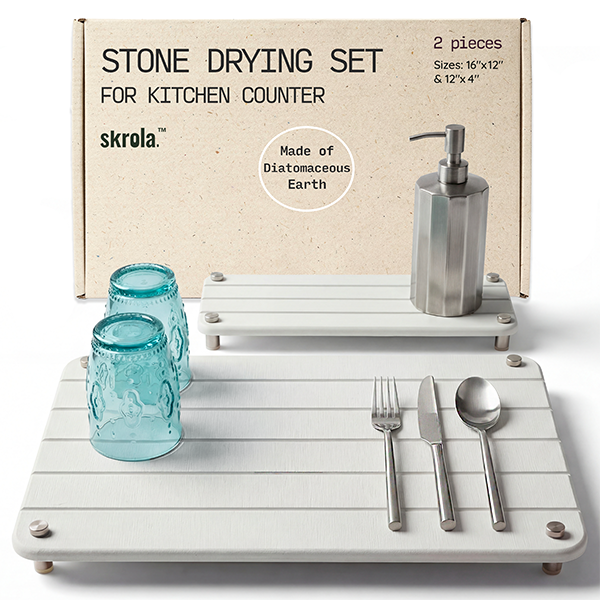
Skrola’s diatomite mat is made from food-grade diatomaceous earth—a naturally porous material that absorbs water fast and dries within minutes. That rapid drying creates an environment where bacteria and mold simply can’t thrive. It’s not just fast—it’s a fast drying kitchen mat that works for your health.
But we didn’t stop there. Unlike other mats that sit flat and trap moisture underneath, our design is elevated with anti-slip stainless steel legs that promote airflow below the mat. This double-defense system helps eliminate the moisture mold needs—both above and below the surface.
- Naturally antibacterial & antimicrobial
- Fast-drying and moisture-wicking
- Stylish and low-maintenance
- No laundry required
Whether you call it a stone dish drying mat, diatomaceous earth mat, or fast drying kitchen mat, this is the smarter way to keep your countertop dry and hygienic.
Shop the Anti-Mold Diatomite Mat on Amazon
[Related: 7 Surprising Uses for a Stone Drying Rack (It’s Not Just for Dishes)]
[Also read: The Ultimate Guide to Diatomaceous Earth]
More Mold Prevention Tips for a Healthier Kitchen
A smart drying mat is a great start, but daily habits help too. Here are a few tips to make mold feel unwelcome:
- Wipe down counters and sinks after use
- Fix any leaks or drips ASAP
- Don’t let wet towels or sponges sit overnight
- Open windows or use a fan while cooking
- Keep indoor humidity below 50%
Mold needs moisture to survive—cut the damp, and you cut the risk.
Final Thoughts: Start with One Smart Swap
Mold might be stealthy, but it’s beatable—and it starts with the tools you use every day.
If your kitchen mat is always damp, it’s time for a healthier habit. Our anti-mold diatomite mat offers a natural, low-maintenance solution that keeps your space dry, clean, and worry-free.
FAQs About Kitchen Mold and Diatomite Mats
Q: Can mold grow under dish drying mats?
A: Yes—especially fabric or silicone ones that trap moisture. A raised, fast drying kitchen mat like our diatomite mat helps prevent this by eliminating excess moisture.
Q: What are signs of hidden mold in the kitchen?
A: Musty odors, warped countertops, allergy flare-ups, or black spots near damp areas often signal mold.
Q: What is diatomaceous earth, and why is it effective?
A: It’s a naturally porous mineral made from fossilized algae. It absorbs moisture quickly, creating a surface that resists mold, bacteria, and mildew